Desert Landscaping in Glendale, AZ: Design Ideas & Costs
Water-Saving Desert Landscaping in Glendale, AZ
How to design a low-maintenance xeriscape that cuts your water bill, survives intense summer heat, and improves your property value.
Why Homeowners Switch to Desert Yards
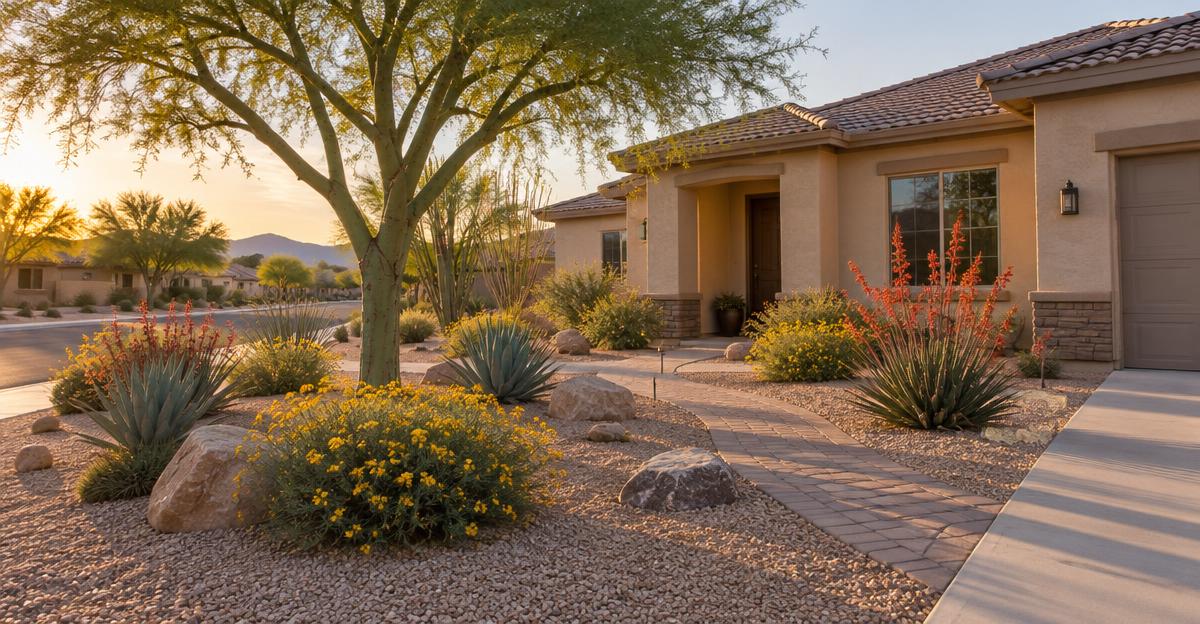
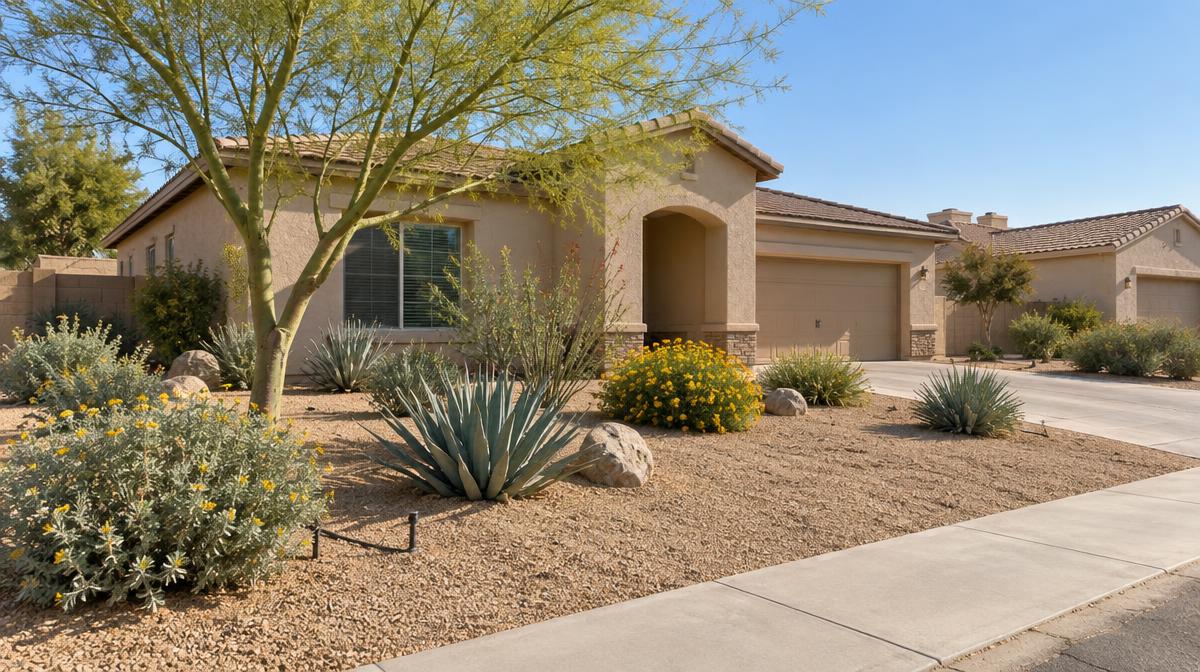
Traditional grass lawns in the West Valley demand constant watering, mowing, and fertilizer. The best desert landscaping Glendale AZ homeowners install replaces this thirsty turf with native plants, decomposed granite, and efficient drip irrigation. This approach creates a durable outdoor space built specifically for the local climate.
A well-planned desert yard is never a barren rock lot. You can design an active, colorful property using drought-tolerant trees, blooming succulents, and functional patios. This guide covers how to transition your yard, what materials to choose, and how much the project will cost.
Plan Your Layout Before Moving Dirt
Every successful xeriscaping project starts with a clear layout. You need to know how water moves across your property, where the sun hits during summer afternoons, and what your community allows. Measure your yard and decide exactly where you want patios, shade trees, and plant focal points.
Map the Sun
Identify which areas get harsh afternoon sun to place shade trees and heat-tolerant cacti correctly.
Check HOA Rules
Review your homeowner association guidelines for approved plants, rock colors, and tree height limits.
Grade for Drainage
Slope the soil away from your foundation to manage water runoff during summer monsoon storms.
Define Activity Zones
Separate dining areas and walkways from dense planting beds to keep maintenance simple.
Always request utility line marking before digging. Hitting an underground gas or water line turns a routine planting job into a costly emergency.
The Financial Return of Xeriscaping
Swapping a grass lawn for drought-tolerant plants reduces outdoor water use heavily. You also eliminate weekly mowing fees, seasonal fertilizer costs, and broken sprinkler repairs. Over a five-year period, these savings often cover the initial cost of the yard conversion.
Replacing natural grass with a well-planned desert yard drops water consumption rapidly while increasing property value through improved curb appeal.
EnviroScape Services Design Team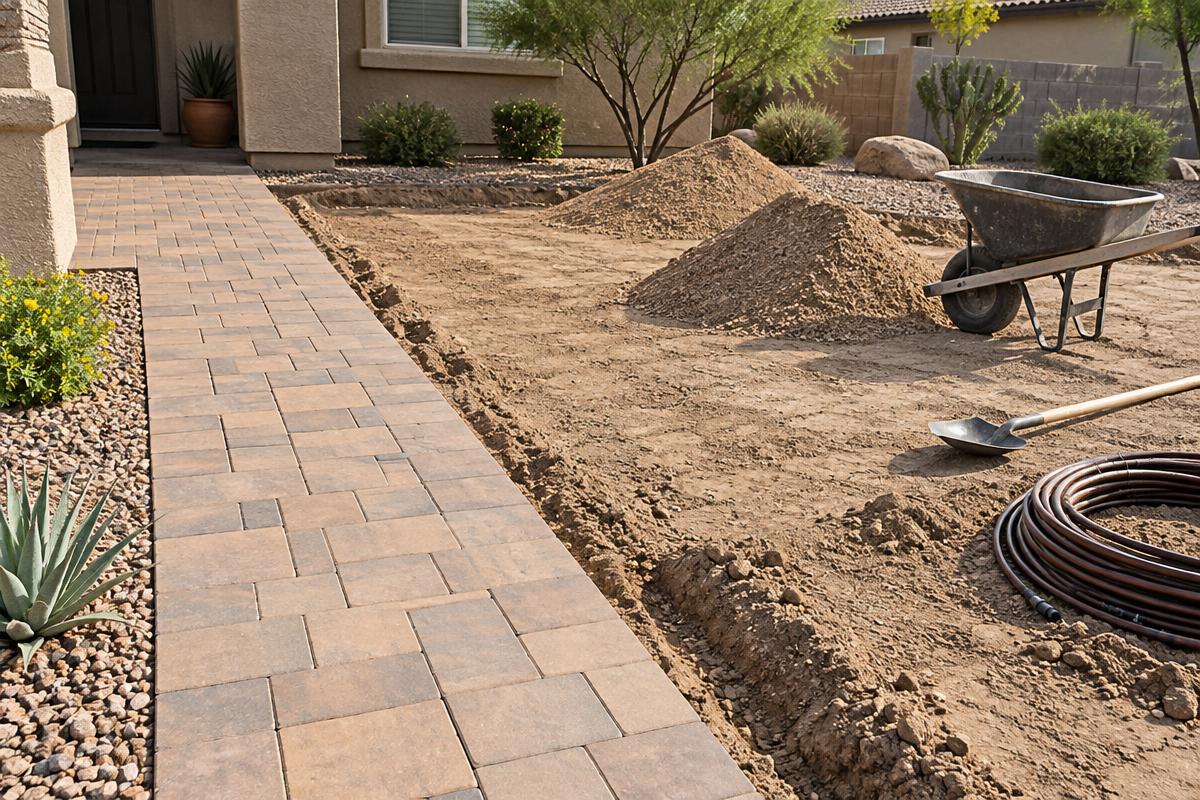
Four Steps to Install a Desert Yard
Remove Existing Turf
Kill and dig out old grass roots completely. Leaving root systems behind guarantees weeds and remnant grass will push up through your new granite.
You must excavate the soil down two inches to make room for the rock layer so it sits flush with your sidewalks and driveway.
Install Hardscaping First
Build your paver patios, retaining walls, and pathways before planting. Heavy equipment and foot traffic will crush delicate new plants.
Setting your hard edges also defines the exact borders for your planting beds and gravel areas.
Lay Out Drip Irrigation
Run new PVC main lines and poly drip tubing to your planned plant locations while the soil is exposed.
Bury the lines in shallow trenches to protect them from sun damage and foot traffic. Test the system for leaks before covering the ground.
Plant and Spread Rock
Place your trees and shrubs in their designated spots. Dig holes twice as wide as the root ball to encourage outward growth.
Finally, cover the bare soil with a two-inch layer of decomposed granite to seal in moisture and provide a finished look.
Average Desert Yard Material Costs
| Element | Best Used For | Typical Cost Range | Important Consideration |
|---|---|---|---|
| Decomposed Granite | Ground cover across the entire yard | $80 to $150 per ton installed | Requires a two-inch depth to block weeds and retain moisture. |
| Boulders | Visual focal points and natural seating | $150 to $400 each installed | Size and weight dictate equipment needs for delivery and placement. |
| Native Trees | Adding shade and vertical height | $150 to $300 for 15-gallon sizes | Box trees (24-inch) cost significantly more but provide instant shade. |
| Drip Irrigation | Watering plants efficiently | $500 to $1,500 per zone | Trenching through hard soil or rock drives the labor price up. |
Common Desert Landscaping Mistakes
Using Black Plastic Weed Barrier
Plastic traps heat, degrades quickly, and blocks water from reaching plant roots. Rely on deep granite and pre-emergent sprays instead.
Planting Too Close to Houses
A small palo verde sapling grows wide rapidly. Keep trees at least ten feet away from roofs, walls, and property lines.
Overwatering Native Plants
Desert species rot when sitting in wet soil. Water deeply but infrequently to encourage strong, deep root systems.
Creating a Flat Rock Sea
A yard covered only in gravel looks commercial. Add dirt mounds, varying rock sizes, and boulders for natural depth.
Forgetting About Drainage
Decomposed granite washes away easily if you do not direct runoff away from slopes and walkways during heavy storms.
Low-Maintenance Ideas That Save Water
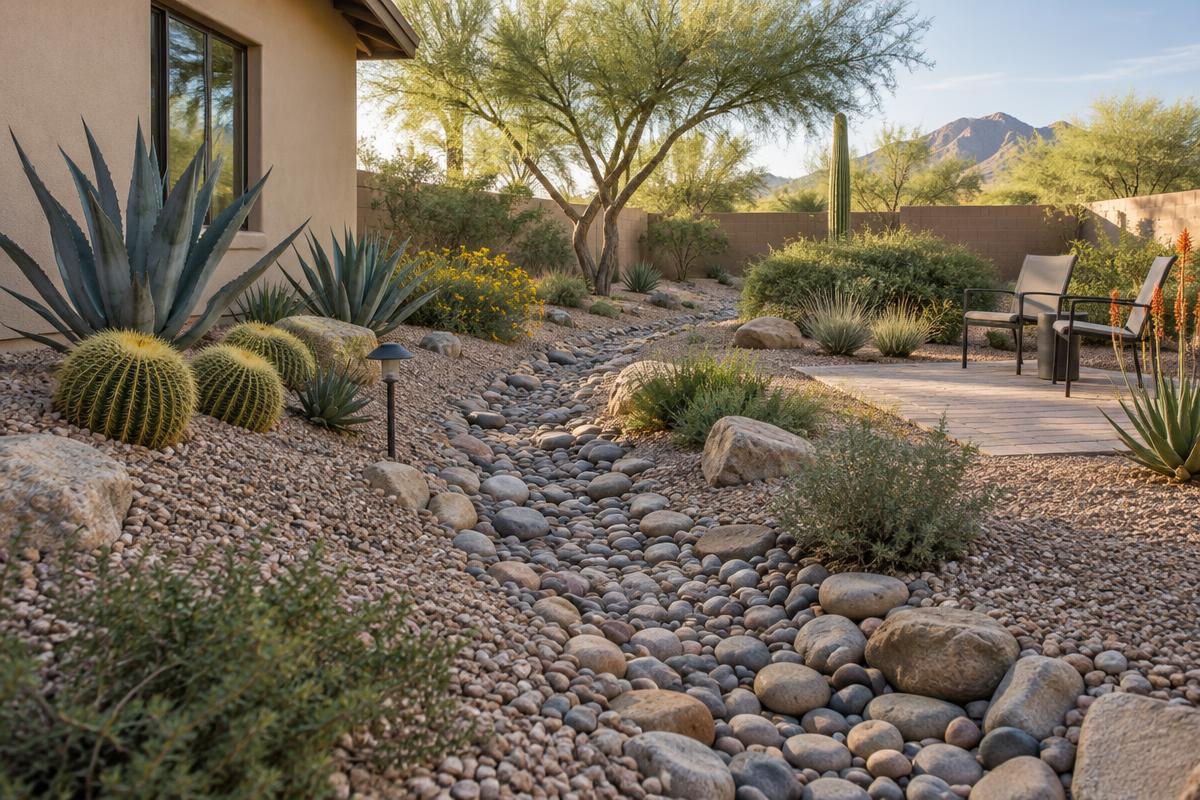
Faux Dry Creek Beds
Shape a shallow channel lined with river rock to control storm runoff while adding a natural visual feature to the yard.
Grouped Succulents
Cluster agave, aloe, and barrel cacti in focal areas rather than spacing them out evenly across the entire property.
Permeable Paver Patios
Install sand-set pavers to create a durable seating area that allows rainwater to soak into the ground instead of running off.
Artificial Turf Accents
Place a small patch of high-quality synthetic grass for pets or children without taking on the massive water bill of a real lawn.
When to Hire a Landscaping Professional
A homeowner can handle a small side yard conversion over a weekend. Large front yard overhauls, heavy boulder placement, and complex irrigation systems require professional crews with the right equipment.
Usually Manageable for a Homeowner
- Planting small one-gallon or five-gallon shrubs
- Spreading a few bags of supplemental gravel
- Swapping out a broken drip emitter
- Pulling seasonal weeds by hand
- Installing simple solar pathway lights
Call a Professional
- Full turf removal and soil grading
- Trenching and installing multi-zone irrigation manifolds
- Moving and placing ton-sized boulders
- Planting large 24-inch box trees
- Laying professional-grade paver patios and walkways
- Designing a complete property layout for HOA approval
EnviroScape Services builds custom outdoor spaces, handles precise plant installation, and provides reliable landscape maintenance across Glendale and the surrounding West Valley.
Desert Landscaping Glendale FAQs
What are the best low-maintenance plants for Glendale?
Texas sage, red bird of paradise, agave, trailing lantana, and desert spoon thrive in the heat and require very little pruning. Native trees like palo verde and desert willow provide excellent shade with low water needs.
How much water does xeriscaping Glendale AZ yards actually save?
Replacing a grass lawn with desert plants can reduce outdoor water usage by 50 to 75 percent. The exact savings depend on your drip irrigation schedule and the number of plants installed.
Do desert yards attract more pests?
Proper plant spacing and avoiding standing water keep pest numbers low. Wood mulch attracts bugs, which is why decomposed granite is the standard ground cover used in the desert.
How often should I water my desert plants?
Established native plants usually need deep watering once every one to two weeks during the peak summer heat and only once a month during the winter.
Can I mix artificial turf with desert plants?
Yes. Many homeowners use synthetic grass to create a functional play area and surround it with drought-tolerant plant borders, hardscape features, and shade trees.
Upgrade Your Yard With EnviroScape Services
Stop wasting time and money on a lawn that struggles in the Arizona heat. EnviroScape Services designs and installs beautiful, water-efficient properties across Glendale, Peoria, Phoenix, and surrounding West Valley communities.
We handle the entire process. From grading and irrigation to hardscaping and final planting, you get a custom layout that fits your budget and cuts your water bill.
Call 480-234-4975 Request a Consultation View All Services