Monsoon Yard Cleanup Glendale AZ: Weed Control Guide
Monsoon Yard Cleanup in Glendale: Weed Control After Arizona Storms
How to restore a West Valley yard after wind, runoff, debris, irrigation damage, and the weed growth that follows meaningful monsoon rain.
Written by the EnviroScape Services Team
Request Yard Cleanup Explore Landscape MaintenanceMonsoon Cleanup Is More Than Picking Up Debris
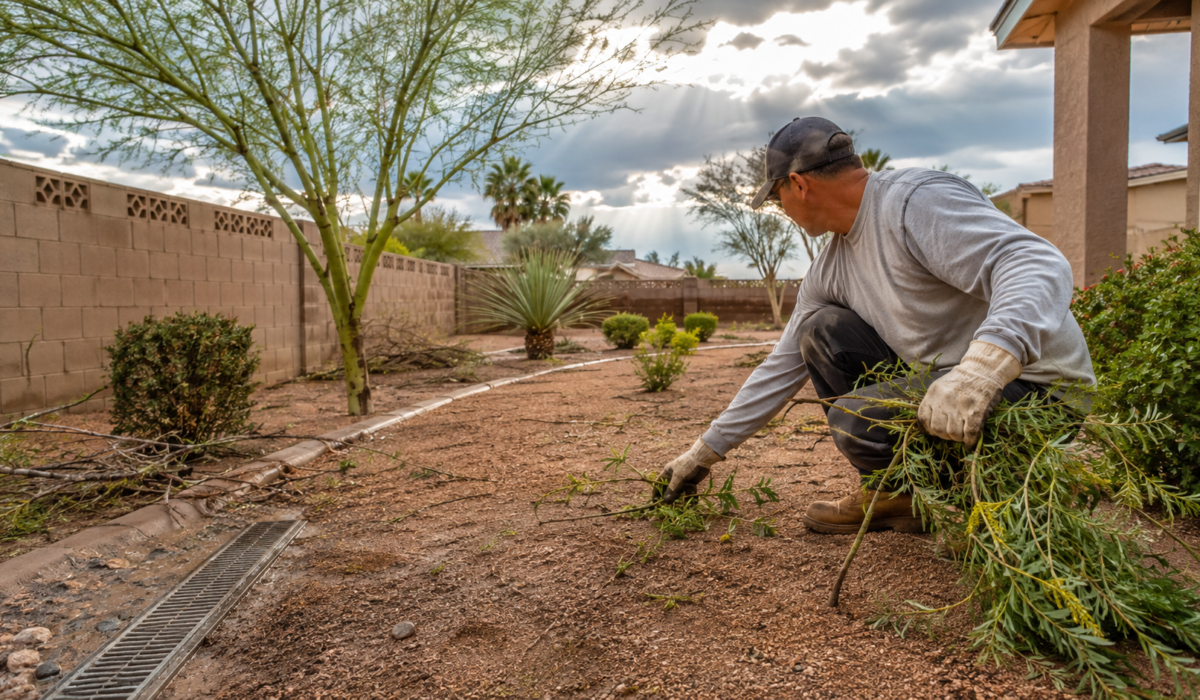
A West Valley monsoon can turn a quiet Glendale yard into a cleanup project in one evening. Wind drops branches and palm debris into planting beds. Fast runoff moves decomposed granite across walkways. Irrigation boxes fill with silt. Then, after the surface dries, weeds begin appearing wherever rain reached dormant seed.
The mistake is treating all of this as one problem. Debris, plant damage, drainage, irrigation, existing weeds, and prevention require different responses. This guide explains the right order for restoring a Glendale landscape safely and deciding when professional cleanup is the practical next step.
Start With Safety, Not Appearance
Do not begin trimming or spraying while a storm is active or when lightning, strong wind, flooding, unstable trees, or downed utility lines are still a concern. Once conditions are safe to walk, photograph the property before moving major debris so you have a record of tree damage, washout, standing water, irrigation damage, and blocked drainage.
Clear Access First
Remove loose debris from doors, sidewalks, driveways, and drainage paths before focusing on appearance.
Mark Hazards
Identify hanging branches, leaning trees, exposed roots, split trunks, and broken supports before anyone works below them.
Check Drainage
Inspect catch basins, channel drains, curb outlets, and low areas for sediment, granite, leaves, and standing water.
Inspect Irrigation
Check sprinkler heads, drip lines, valve boxes, filters, and controller programming before the next scheduled watering cycle.
The movement of granite, mulch, and soil is useful evidence. It shows how stormwater crossed the property and where erosion or drainage problems may repeat during the next monsoon.
Why Monsoon Rain Produces a New Wave of Weeds
A dry, weed-free yard before the first meaningful monsoon rain does not mean the soil is free of seed. Bare areas, decomposed-granite beds, cracks, edges, and disturbed soil can hold dormant weed seed until moisture and suitable temperatures trigger germination.
Storm cleanup can also create openings. Aggressive raking, dragging branches across rock beds, or leaving soil exposed can disturb the surface and give new seedlings room to establish.
A single spray or quick pull rarely solves a recurring monsoon weed problem. Remove emerged weeds, correct favorable conditions, plan prevention where appropriate, and monitor again after the next rain.
EnviroScape Services Monsoon Cleanup GuidanceThe Four Parts of a Complete Monsoon Yard Cleanup
Clear Debris Without Over-Pruning
Remove detached branches, leaves, trash, and windblown material from walkways, turf, planting beds, and drainage features.
Limit pruning to broken, dangerous, or access-blocking material unless a qualified tree professional recommends more. Heavy summer canopy removal can expose previously shaded plant tissue to sunburn.
Restore Drainage Before the Next Storm
Clear sediment from drains, move granite away from walls and thresholds, and document new erosion channels.
If standing water, repeat erosion, or runoff across hardscape keeps returning, cleanup alone may not be enough. A drainage evaluation may point to regrading, drain service, or a site-specific hardscape solution.
Separate Existing-Weed Control From Prevention
Pre-emergent and post-emergent products do different jobs. Prevention products do not remove mature weeds already growing, while post-emergent treatments depend on correct identification, growth stage, location, and label requirements.
Small annual weeds may be practical to hand-pull before they set seed. Perennials can regrow from underground structures, and careless herbicide use around desirable plants can injure non-target roots.
Reset Irrigation After Real Rain
Do not let a controller water on top of saturated soil simply because its weekly program is still active.
Check soil moisture, then inspect broken heads, displaced emitters, muddy valve boxes, clogged filters, leaks, pressure loss, and controller errors. EnviroScape can handle repairs as part of a broader landscape and irrigation maintenance plan.
Weed-Control Options Compared
| Method | Best Used For | Limitation | Important Consideration |
|---|---|---|---|
| Hand Pulling | Small annual weeds in workable soil | May not remove perennial roots or underground structures | Best done before flowering or seed production |
| Post-Emergent | Weeds already actively growing | Effectiveness varies by species and growth stage | Use only products labeled for the target weed and site |
| Pre-Emergent | Reducing establishment of future seedlings | Does not kill mature weeds already present | Timing and placement must fit the label and planting area |
| Professional Management |
Large infestations, mixed weeds, sensitive plantings, or repeat failures | Requires a property-specific plan rather than a blanket treatment | Weed ID, nearby plants, runoff, pets, people, and label restrictions all matter |
Common Monsoon Cleanup Mistakes
Spraying Before Identifying the Weed
A treatment suited to one annual broadleaf may do little for a perennial grass and may injure nearby plants.
Using Pre-Emergent on Established Weeds
Prevention and control are different jobs. Existing weeds need their own management strategy.
Heavy Pruning for a Cleaner Look
Removing too much summer canopy can create extra heat and sun exposure for already stressed plants.
Ignoring Drainage Because Water Disappeared
The same runoff path can erode again during the next storm even when the yard looks dry a day later.
Running the Normal Irrigation Schedule Immediately
Check soil condition and system performance first instead of watering on top of storm moisture automatically.
How to Reduce the Next Weed Wave
Remove New Weeds Early
Pull or manage seedlings before they flower and add another generation of seed to the landscape.
Repair Disturbed Rock and Mulch
Restore decomposed granite and mulch where runoff, raking, or branch removal exposed soil.
Correct Persistent Moisture
Overspray, leaks, low emitters, clogged drains, and ponding can keep supporting weeds long after the storm passes.
Use Prevention as One Part of the Plan
Pre-emergent may be useful where appropriate, but it does not replace identification, drainage correction, irrigation repair, cleanup, and monitoring.
When Professional Cleanup Makes Sense
A homeowner can often handle light debris and a few small weeds. Professional help becomes more practical when the project includes storm hazards, widespread weeds, drainage problems, irrigation damage, or a large cleanup area.
Usually Manageable for a Homeowner
- Light debris that can be safely reached from the ground
- A few small annual weeds before they set seed
- Minor granite redistribution away from sidewalks and drains
- Basic visual irrigation inspection after rainfall
- Checking controller schedules before the next run
Call a Professional
- Heavy debris or large unstable branches
- Widespread or recurring weed pressure
- Repeated drainage, erosion, or ponding problems
- Broken irrigation components or unexplained pressure loss
- Sensitive planting areas where treatment mistakes could cause damage
- Large properties, HOA deadlines, or multi-day cleanup projects
EnviroScape Services provides complete landscaping services, ongoing landscape maintenance, and outdoor improvement work across Glendale and the surrounding West Valley.
Glendale Monsoon Yard Cleanup FAQs
What should I check first after a monsoon storm?
Wait until conditions are safe, photograph the property, and inspect hanging branches, leaning trees, exposed roots, blocked drains, standing water, new erosion, displaced granite, broken irrigation components, and debris blocking access.
How quickly can weeds appear after monsoon rain?
Timing varies by species, moisture, temperature, and seed already present. Begin checking once the soil is workable and continue after later storms, especially in rock beds, cracks, edges, disturbed soil, and areas receiving runoff or irrigation overspray.
Does pre-emergent kill weeds that are already growing?
No. Pre-emergent products are intended to reduce future seedling establishment. Existing weeds require identification and a separate control strategy.
Should trees and shrubs be pruned after a monsoon?
Limit work to safe removal of storm damage and immediate hazards. Large overhead limbs, split trunks, exposed roots, new lean, or damage near structures and utilities should be evaluated by a qualified professional.
When should I hire a professional yard-cleanup company?
Professional help is worth considering when the cleanup involves heavy debris, unstable branches, widespread weeds, drainage or erosion problems, irrigation damage, sensitive planting areas, a large property, or an HOA deadline.
Schedule Weed Control or Monsoon Yard Cleanup in Glendale
EnviroScape Services provides customized weed control, yard cleanup, landscape maintenance, irrigation, and outdoor improvement services for homeowners in Glendale, Peoria, Phoenix, and surrounding West Valley communities.
The team evaluates each property based on actual storm damage, weed pressure, plantings, drainage, irrigation condition, and long-term maintenance needs rather than applying one cleanup formula to every yard.
Call 480-234-4975 Request a Consultation View All ServicesPlanning a larger outdoor reset after storm damage? Explore landscape maintenance, concrete decks and pathways, hardscapes and outdoor features, or the full range of EnviroScape Services.