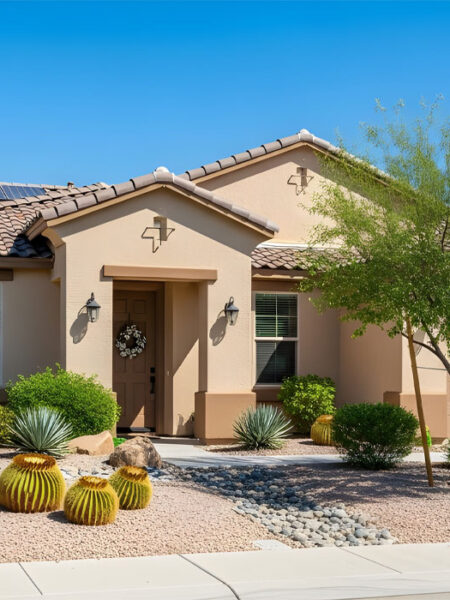
If you’re ready to trade in high-maintenance grass for a beautiful, water-wise landscape, Enviroscape Services, LLC offers expert lawn removal and xeriscaping services tailored to Arizona’s desert climate. Whether your goal is to save water, reduce maintenance costs, or create a more natural and sustainable yard, we design and install xeriscapes that enhance curb appeal while thriving in Glendale, Peoria, and Phoenix year-round.
Make Lawns into Low-Maintenance Beauty
Traditional lawns can be costly and time-consuming to maintain, especially in Arizona’s hot, dry conditions. Water restrictions, high utility bills, and the constant need for mowing and fertilizing make them a challenge for many homeowners. Our lawn removal service takes out turf and replaces it with a custom xeriscape — a thoughtfully designed combination of drought-tolerant plants, decomposed granite, accent boulders, and hardscape features that require little water and minimal upkeep.
We carefully plan every xeriscape design to suit your property’s size, style, and intended use. Whether you want a clean, modern look with desert-friendly plantings or a vibrant, colorful garden with seasonal blooms, our team uses proven planting techniques and water-efficient irrigation to create a landscape that is both stunning and sustainable.
Why Choose Us
Water-saving designs
Native and drought-tolerant plants
Low-maintenance landscapes
Custom layouts for any style
Lasting Value and Year-Round Appeal
A professionally designed xeriscape is an investment that pays off in multiple ways. You’ll reduce your monthly water bills, spend less time on yard work, and enjoy a landscape that enhances your property value. Plus, with Smartscape-certified planning, every project is designed for maximum efficiency, proper irrigation, and plant longevity.
We’ve helped hundreds of homeowners in Glendale, Peoria, and Phoenix make the switch from thirsty lawns to water-wise landscapes, and the results speak for themselves — vibrant, inviting yards that stay beautiful no matter how hot the summer gets.
Lawn Removal & Xeriscaping FAQs
Xeriscaping reduces water use, lowers maintenance costs, eliminates the need for mowing, and provides year-round beauty with plants that are well-suited to Arizona’s desert climate.
Yes. We can remove both real grass and outdated artificial turf, replacing them with a fresh, sustainable xeriscape that fits your design preferences.
Absolutely. By combining colorful drought-tolerant plants, decorative rock, accent boulders, and seasonal blooms, we can create a landscape that’s vibrant and engaging all year long.
Yes. Even low-water landscapes benefit from efficient drip irrigation systems to keep plants healthy with minimal water usage.
xeriscape, water conservation, conservation, landscaping, irrigation, xeriscaping, sustainable landscaping, skip to content, metropolitan water district of southern california, turf removal, native, program, resource central
Frequently Asked Questions
How do I handle existing lawn removal for a successful xeriscaping project?
Handling existing lawn removal is essential for a successful xeriscaping project. Begin by removing the grass and any invasive plant species, then prepare the soil for drought-tolerant plants to ensure proper drainage and promote healthy growth.
How can I prepare my lawn for removal?
Preparing your lawn for removal involves a few key steps: first, clear the area of any furniture, decorations, or debris. Next, water the lawn thoroughly to soften the soil, making it easier to remove the grass and roots.
What tools are needed for lawn removal?
The tools needed for lawn removal include a shovel, a hoe, a rake, and a sod cutter. These tools help effectively remove grass and roots, preparing the area for xeriscaping or other landscaping solutions.
How long does lawn removal take?
The duration of lawn removal typically depends on the size of the area and the specific methods used. Generally, the process can take anywhere from a few hours to a couple of days to complete.
What are the steps for successful xeriscaping?
The steps for successful xeriscaping include assessing your landscape, planning your design, removing existing grass, selecting drought-tolerant plants, implementing efficient irrigation, and maintaining your xeriscape for optimal water conservation and aesthetics.
How do I choose drought-tolerant plants?
Choosing drought-tolerant plants involves selecting species that thrive in arid conditions, such as succulents, native grasses, and desert-adapted shrubs. Consider factors like soil type, sunlight, and water availability to ensure a successful xeriscape.
What is the cost of lawn removal services?
The cost of lawn removal services varies based on factors such as the size of the area, the type of grass, and any additional landscaping needs. Typically, prices range from $1 to $3 per square foot.
How does xeriscaping reduce water usage?
Xeriscaping significantly reduces water usage by incorporating drought-tolerant plants, efficient irrigation systems, and strategic landscaping techniques. This approach minimizes water waste and promotes sustainable practices suitable for Arizona's arid climate.
Can I xeriscape my lawn myself?
You can xeriscape your lawn yourself. With the right resources and knowledge about drought-tolerant plants and efficient irrigation methods, many homeowners successfully create beautiful xeriscapes that thrive in Arizona's climate.
What are the benefits of xeriscaping?
The benefits of xeriscaping include reduced water usage, lower maintenance costs, and enhanced aesthetic appeal. This sustainable landscaping approach is ideal for Arizona's desert climate, promoting the use of drought-tolerant plants that thrive with minimal irrigation.
How do I maintain a xeriscaped yard?
Maintaining a xeriscaped yard involves minimal watering, regular weeding, and occasional pruning of drought-tolerant plants. Check mulch levels to retain moisture and ensure efficient irrigation systems are functioning properly to promote a healthy, sustainable landscape.
What soil amendments are needed for xeriscaping?
The soil amendments needed for xeriscaping include organic matter, such as compost, to improve soil structure and drainage, as well as gypsum to enhance water infiltration and reduce soil compaction.
How do I design a xeriscape layout?
Designing a xeriscape layout involves selecting drought-tolerant plants, grouping them by water needs, and incorporating efficient irrigation systems while considering the natural contours of your landscape for optimal water conservation.
What common mistakes should I avoid in xeriscaping?
Common mistakes to avoid in xeriscaping include overwatering, neglecting soil preparation, and choosing inappropriate plants. Additionally, failing to plan for proper drainage and not considering plant spacing can hinder the effectiveness of your water-wise landscape.
How does climate affect xeriscaping choices?
The climate significantly influences xeriscaping choices. In Arizona's arid environment, selecting drought-tolerant plants and efficient irrigation systems is essential to create sustainable, low-maintenance landscapes that thrive despite limited water availability.
What irrigation systems work best for xeriscaping?
The irrigation systems that work best for xeriscaping include drip irrigation and soaker hoses. These systems deliver water directly to the plant roots, minimizing evaporation and ensuring efficient water use in Arizona's arid climate.
How can I incorporate rocks in xeriscaping?
Incorporating rocks in xeriscaping can enhance your landscape's aesthetic and functionality. Use a variety of sizes and colors for pathways, borders, or decorative features, and combine them with drought-tolerant plants to create a visually appealing, low-maintenance environment.
What plants thrive in Arizonas desert climate?
Plants that thrive in Arizona's desert climate include succulents like agave and aloe, native cacti such as saguaro and prickly pear, and drought-tolerant shrubs like desert marigold and red yucca. These plants are well-adapted to conserve water and withstand heat.
How do I transition from grass to xeriscape?
Transitioning from grass to xeriscape involves removing the existing lawn, improving soil quality, and selecting drought-tolerant plants suited for Arizona's climate. Implement efficient irrigation systems to support your new landscape while conserving water.
What is the best time for lawn removal?
The best time for lawn removal is during the cooler months of fall or early spring. This timing minimizes stress on the soil and surrounding plants, ensuring a smoother transition to xeriscaping in Arizona's desert climate.
How can I prevent weeds in xeriscaped areas?
Preventing weeds in xeriscaped areas involves using mulch, which suppresses weed growth, and selecting drought-tolerant plants that fill space effectively. Regular maintenance, such as hand-pulling and monitoring, will also help keep your xeriscape weed-free.
What are the environmental benefits of xeriscaping?
The environmental benefits of xeriscaping include reduced water usage, minimized chemical runoff, and enhanced biodiversity. By utilizing drought-tolerant plants, xeriscaping promotes sustainable landscaping that conserves resources and supports local ecosystems in arid climates like Arizona.
How do I assess my lawns condition before removal?
Assessing your lawn's condition before removal involves checking for signs of disease, pest infestations, and overall health. Look for uneven growth, bare patches, and soil quality to determine if removal is necessary for a successful transition to xeriscaping.
What is the role of mulch in xeriscaping?
The role of mulch in xeriscaping is to retain soil moisture, suppress weeds, and regulate soil temperature. This helps create a sustainable, low-maintenance landscape that thrives in Arizona's desert climate while reducing the need for frequent watering.
How can I create shade in a xeriscape?
Creating shade in a xeriscape involves strategically placing drought-tolerant trees, shrubs, or pergolas to provide relief from the sun. Consider using native plants that thrive in Arizona's climate for effective shade solutions.
What are the aesthetic options for xeriscaping?
The aesthetic options for xeriscaping include a variety of drought-tolerant plants, decorative rocks, mulch, and unique hardscaping elements. These options allow for creative designs that enhance visual appeal while conserving water in arid climates.
How do I handle drainage issues in xeriscaping?
Handling drainage issues in xeriscaping involves creating graded landscapes that direct water away from structures and using permeable materials to allow for proper water absorption. Incorporating swales or rain gardens can also effectively manage excess water.
What is the impact of xeriscaping on local wildlife?
The impact of xeriscaping on local wildlife is positive, as it promotes the use of native, drought-tolerant plants that provide essential habitats and food sources for various species, enhancing biodiversity and supporting the local ecosystem.
How can I educate others about xeriscaping benefits?
Educating others about the benefits of xeriscaping involves sharing information on its water-saving advantages, low maintenance requirements, and aesthetic appeal. Consider hosting workshops, creating informative materials, or utilizing social media to spread awareness effectively.
What maintenance is required for drought-tolerant plants?
The maintenance required for drought-tolerant plants is minimal. Regular watering during establishment, occasional pruning, and monitoring for pests are essential to ensure their health and longevity in Arizona's climate.
xeriscaping service, xeriscapes unlimited inc, low maintenance xeriscape front yard, when to put accent marks in spanish, drought friendly landscaping az, xeriscaping services phoenix, eco friendly landscaping arizona, xeriscape landscaping peoria az
Lawn Removal and Xeriscaping Services in Arizona
At Enviroscape Services, we specialize in transforming traditional lawns into sustainable xeriscaped landscapes that are both beautiful and functional. Our services are tailored specifically to meet the unique challenges posed by Arizona's desert climate, ensuring that your outdoor space thrives while conserving water.
By choosing our lawn removal and xeriscaping services, you are making a commitment to a more environmentally friendly approach to landscaping. Our expert team works closely with you to design a custom xeriscape that incorporates drought-tolerant plants, efficient irrigation systems, and aesthetically pleasing hardscape features.
Benefits of Xeriscaping for Arizona Homeowners
Xeriscaping offers numerous advantages for homeowners in Arizona, particularly in terms of water conservation and reduced maintenance. By opting for a xeriscaped yard, you can significantly decrease your water usage, which is crucial in a region where water resources are limited.
In addition to conserving water, xeriscaping minimizes the time and effort spent on yard maintenance. With the right selection of plants and landscaping features, you can enjoy a stunning outdoor space that requires little upkeep, allowing you to spend more time enjoying your yard rather than maintaining it.
Understanding the Xeriscaping Process
The process of xeriscaping begins with careful planning and design to ensure that your landscape is both functional and visually appealing. Our team conducts an assessment of your property, taking into account factors such as soil type, sun exposure, and existing vegetation to create a tailored plan.
Once the design is finalized, we proceed with the lawn removal and installation of your xeriscape. This includes selecting the right drought-tolerant plants, implementing efficient irrigation systems, and adding decorative elements like rocks and boulders to enhance the overall aesthetic of your landscape.
Xeriscaping Maintenance Tips
Once your xeriscaped yard is established, maintaining its beauty is straightforward. Regular checks on irrigation systems and occasional pruning of plants are key to ensuring that your landscape remains healthy and vibrant throughout the year.
Additionally, incorporating mulch around plants can help retain moisture and suppress weeds, further reducing the need for maintenance. By following these simple tips, you can enjoy a stunning xeriscape that thrives in Arizona's challenging climate with minimal effort.
xeriscape, water conservation, conservation, landscaping, irrigation, xeriscaping, sustainable landscaping, skip to content, metropolitan water district of southern california, turf removal, native, program, resource central
Frequently Asked Questions
How do I handle existing lawn removal for a successful xeriscaping project?
Handling existing lawn removal is essential for a successful xeriscaping project. Begin by removing the grass and any invasive plant species, then prepare the soil for drought-tolerant plants to ensure proper drainage and promote healthy growth.
How can I prepare my lawn for removal?
Preparing your lawn for removal involves a few key steps: first, clear the area of any furniture, decorations, or debris. Next, water the lawn thoroughly to soften the soil, making it easier to remove the grass and roots.
What tools are needed for lawn removal?
The tools needed for lawn removal include a shovel, a hoe, a rake, and a sod cutter. These tools help effectively remove grass and roots, preparing the area for xeriscaping or other landscaping solutions.
How long does lawn removal take?
The duration of lawn removal typically depends on the size of the area and the specific methods used. Generally, the process can take anywhere from a few hours to a couple of days to complete.
What are the steps for successful xeriscaping?
The steps for successful xeriscaping include assessing your landscape, planning your design, removing existing grass, selecting drought-tolerant plants, implementing efficient irrigation, and maintaining your xeriscape for optimal water conservation and aesthetics.
How do I choose drought-tolerant plants?
Choosing drought-tolerant plants involves selecting species that thrive in arid conditions, such as succulents, native grasses, and desert-adapted shrubs. Consider factors like soil type, sunlight, and water availability to ensure a successful xeriscape.
What is the cost of lawn removal services?
The cost of lawn removal services varies based on factors such as the size of the area, the type of grass, and any additional landscaping needs. Typically, prices range from
to per square foot.
How does xeriscaping reduce water usage?
Xeriscaping significantly reduces water usage by incorporating drought-tolerant plants, efficient irrigation systems, and strategic landscaping techniques. This approach minimizes water waste and promotes sustainable practices suitable for Arizona's arid climate.
Can I xeriscape my lawn myself?
You can xeriscape your lawn yourself. With the right resources and knowledge about drought-tolerant plants and efficient irrigation methods, many homeowners successfully create beautiful xeriscapes that thrive in Arizona's climate.
What are the benefits of xeriscaping?
The benefits of xeriscaping include reduced water usage, lower maintenance costs, and enhanced aesthetic appeal. This sustainable landscaping approach is ideal for Arizona's desert climate, promoting the use of drought-tolerant plants that thrive with minimal irrigation.
How do I maintain a xeriscaped yard?
Maintaining a xeriscaped yard involves minimal watering, regular weeding, and occasional pruning of drought-tolerant plants. Check mulch levels to retain moisture and ensure efficient irrigation systems are functioning properly to promote a healthy, sustainable landscape.
What soil amendments are needed for xeriscaping?
The soil amendments needed for xeriscaping include organic matter, such as compost, to improve soil structure and drainage, as well as gypsum to enhance water infiltration and reduce soil compaction.
How do I design a xeriscape layout?
Designing a xeriscape layout involves selecting drought-tolerant plants, grouping them by water needs, and incorporating efficient irrigation systems while considering the natural contours of your landscape for optimal water conservation.
What common mistakes should I avoid in xeriscaping?
Common mistakes to avoid in xeriscaping include overwatering, neglecting soil preparation, and choosing inappropriate plants. Additionally, failing to plan for proper drainage and not considering plant spacing can hinder the effectiveness of your water-wise landscape.
How does climate affect xeriscaping choices?
The climate significantly influences xeriscaping choices. In Arizona's arid environment, selecting drought-tolerant plants and efficient irrigation systems is essential to create sustainable, low-maintenance landscapes that thrive despite limited water availability.
What irrigation systems work best for xeriscaping?
The irrigation systems that work best for xeriscaping include drip irrigation and soaker hoses. These systems deliver water directly to the plant roots, minimizing evaporation and ensuring efficient water use in Arizona's arid climate.
How can I incorporate rocks in xeriscaping?
Incorporating rocks in xeriscaping can enhance your landscape's aesthetic and functionality. Use a variety of sizes and colors for pathways, borders, or decorative features, and combine them with drought-tolerant plants to create a visually appealing, low-maintenance environment.
What plants thrive in Arizonas desert climate?
Plants that thrive in Arizona's desert climate include succulents like agave and aloe, native cacti such as saguaro and prickly pear, and drought-tolerant shrubs like desert marigold and red yucca. These plants are well-adapted to conserve water and withstand heat.
How do I transition from grass to xeriscape?
Transitioning from grass to xeriscape involves removing the existing lawn, improving soil quality, and selecting drought-tolerant plants suited for Arizona's climate. Implement efficient irrigation systems to support your new landscape while conserving water.
What is the best time for lawn removal?
The best time for lawn removal is during the cooler months of fall or early spring. This timing minimizes stress on the soil and surrounding plants, ensuring a smoother transition to xeriscaping in Arizona's desert climate.
How can I prevent weeds in xeriscaped areas?
Preventing weeds in xeriscaped areas involves using mulch, which suppresses weed growth, and selecting drought-tolerant plants that fill space effectively. Regular maintenance, such as hand-pulling and monitoring, will also help keep your xeriscape weed-free.
What are the environmental benefits of xeriscaping?
The environmental benefits of xeriscaping include reduced water usage, minimized chemical runoff, and enhanced biodiversity. By utilizing drought-tolerant plants, xeriscaping promotes sustainable landscaping that conserves resources and supports local ecosystems in arid climates like Arizona.
How do I assess my lawns condition before removal?
Assessing your lawn's condition before removal involves checking for signs of disease, pest infestations, and overall health. Look for uneven growth, bare patches, and soil quality to determine if removal is necessary for a successful transition to xeriscaping.
What is the role of mulch in xeriscaping?
The role of mulch in xeriscaping is to retain soil moisture, suppress weeds, and regulate soil temperature. This helps create a sustainable, low-maintenance landscape that thrives in Arizona's desert climate while reducing the need for frequent watering.
How can I create shade in a xeriscape?
Creating shade in a xeriscape involves strategically placing drought-tolerant trees, shrubs, or pergolas to provide relief from the sun. Consider using native plants that thrive in Arizona's climate for effective shade solutions.
What are the aesthetic options for xeriscaping?
The aesthetic options for xeriscaping include a variety of drought-tolerant plants, decorative rocks, mulch, and unique hardscaping elements. These options allow for creative designs that enhance visual appeal while conserving water in arid climates.
How do I handle drainage issues in xeriscaping?
Handling drainage issues in xeriscaping involves creating graded landscapes that direct water away from structures and using permeable materials to allow for proper water absorption. Incorporating swales or rain gardens can also effectively manage excess water.
What is the impact of xeriscaping on local wildlife?
The impact of xeriscaping on local wildlife is positive, as it promotes the use of native, drought-tolerant plants that provide essential habitats and food sources for various species, enhancing biodiversity and supporting the local ecosystem.
How can I educate others about xeriscaping benefits?
Educating others about the benefits of xeriscaping involves sharing information on its water-saving advantages, low maintenance requirements, and aesthetic appeal. Consider hosting workshops, creating informative materials, or utilizing social media to spread awareness effectively.
What maintenance is required for drought-tolerant plants?
The maintenance required for drought-tolerant plants is minimal. Regular watering during establishment, occasional pruning, and monitoring for pests are essential to ensure their health and longevity in Arizona's climate.
xeriscaping service, xeriscapes unlimited inc, low maintenance xeriscape front yard, when to put accent marks in spanish, drought friendly landscaping az, xeriscaping services phoenix, eco friendly landscaping arizona, xeriscape landscaping peoria az
Lawn Removal and Xeriscaping Services in Arizona
At Enviroscape Services, we specialize in transforming traditional lawns into sustainable xeriscaped landscapes that are both beautiful and functional. Our services are tailored specifically to meet the unique challenges posed by Arizona's desert climate, ensuring that your outdoor space thrives while conserving water.
By choosing our lawn removal and xeriscaping services, you are making a commitment to a more environmentally friendly approach to landscaping. Our expert team works closely with you to design a custom xeriscape that incorporates drought-tolerant plants, efficient irrigation systems, and aesthetically pleasing hardscape features.
Benefits of Xeriscaping for Arizona Homeowners
Xeriscaping offers numerous advantages for homeowners in Arizona, particularly in terms of water conservation and reduced maintenance. By opting for a xeriscaped yard, you can significantly decrease your water usage, which is crucial in a region where water resources are limited.
In addition to conserving water, xeriscaping minimizes the time and effort spent on yard maintenance. With the right selection of plants and landscaping features, you can enjoy a stunning outdoor space that requires little upkeep, allowing you to spend more time enjoying your yard rather than maintaining it.
Understanding the Xeriscaping Process
The process of xeriscaping begins with careful planning and design to ensure that your landscape is both functional and visually appealing. Our team conducts an assessment of your property, taking into account factors such as soil type, sun exposure, and existing vegetation to create a tailored plan.
Once the design is finalized, we proceed with the lawn removal and installation of your xeriscape. This includes selecting the right drought-tolerant plants, implementing efficient irrigation systems, and adding decorative elements like rocks and boulders to enhance the overall aesthetic of your landscape.
Xeriscaping Maintenance Tips
Once your xeriscaped yard is established, maintaining its beauty is straightforward. Regular checks on irrigation systems and occasional pruning of plants are key to ensuring that your landscape remains healthy and vibrant throughout the year.
Additionally, incorporating mulch around plants can help retain moisture and suppress weeds, further reducing the need for maintenance. By following these simple tips, you can enjoy a stunning xeriscape that thrives in Arizona's challenging climate with minimal effort.